
For many businesses, cybersecurity still feels like something you “set up once” and move on from. A firewall is in place, antivirus is installed, and that’s where the conversation ends. That assumption usually holds… right up until something unusual happens. A suspicious login. A strange email that slips through. A system behaving differently with no clear reason why.
That’s where the idea of a soc security operations center cayman starts to come into the picture. Not as another tool, but as a different way of thinking about security altogether.
What a SOC really does (without the technical noise)
A Security Operations Center isn’t just software or a dashboard. It’s a continuous process. Think of it as having someone always watching your systems, quietly in the background, looking for patterns that don’t belong.
Instead of waiting for a problem to surface, a SOC focuses on:
- Monitoring activity across systems in real time
- Spotting unusual behaviour before it escalates
- Investigating alerts to separate real threats from false alarms
- Responding quickly when something needs attention
Most businesses don’t struggle because they lack tools. They struggle because no one is actively connecting the dots between what those tools are reporting.
Why this matters more in Cayman than many realize
Cayman businesses operate in a unique environment. Even smaller companies often handle sensitive financial information, client records, or cross-border transactions. That alone makes them more attractive targets than they might assume.
Add to that:
- Increased use of cloud platforms
- Remote access to systems
- Email-driven workflows
…and the exposure quietly grows.
What’s interesting is that many cyber incidents here don’t start with complex hacks. They start with something simple. A well-crafted email. A reused password. An unnoticed login from a new location. The kind of thing that slips past basic protections.
When a SOC starts making sense
Not every business needs to jump straight into a full-scale setup. But there are clear signs that it’s worth considering.
- You’re handling client or financial data that would cause serious issues if exposed
- Your team relies heavily on email, shared systems, or remote access
- You’ve experienced suspicious activity before, even if nothing major happened
- There’s no one internally focused on monitoring security events
- Your business is growing, and systems are becoming harder to track manually
In these situations, the risk isn’t always visible. It builds quietly in the background.
When it might be too early
On the other hand, some businesses are still at a stage where a full SOC may not be necessary.
If your operations are small, your systems are limited, and your exposure is low, it might make more sense to strengthen the basics first. Strong passwords, secure configurations, regular updates, and access controls go a long way.
But even then, ignoring cybersecurity completely isn’t really an option anymore. The entry point for most attacks today is still human behaviour, not system failure.
There’s a middle ground most businesses overlook
One of the biggest misconceptions is that a SOC has to be built internally. In reality, many businesses in Cayman lean toward external support.
Options like cyber security services cayman provide ongoing monitoring and protection without the cost of building a full team in-house. It’s a more practical approach, especially for companies that don’t have dedicated security resources.
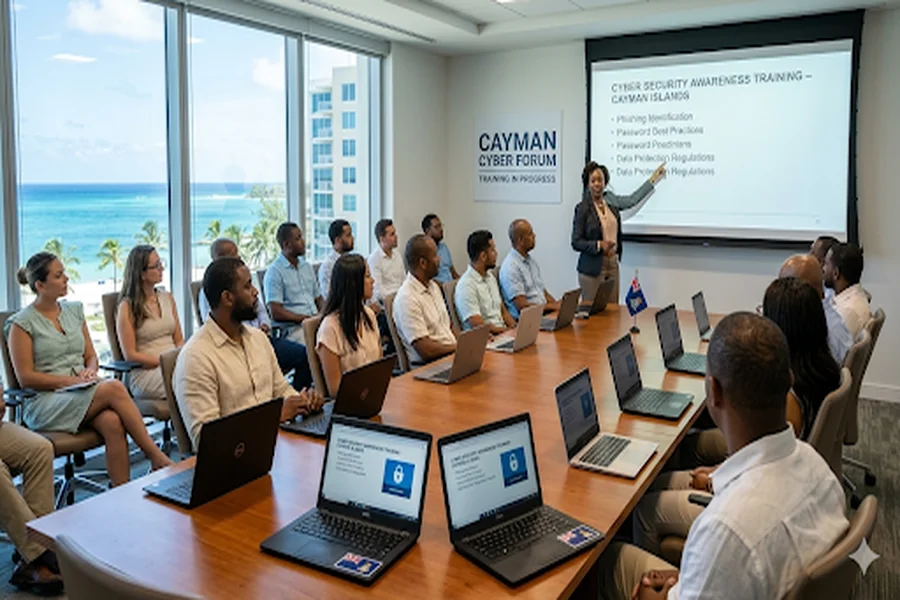
Another area that often gets underestimated is awareness. Many incidents start with a single click or a moment of distraction. That’s why cyber security awareness training cayman has become just as important as technical protection. When employees understand what to look for, the entire risk profile of a business changes.
So how do you decide?
There isn’t a single answer, but there is a simple way to think about it.
Ask yourself:
- How valuable is the data we handle?
- How quickly would we notice if something went wrong?
- Who is responsible for monitoring our systems today?
- Are we reacting to issues, or staying ahead of them?
If those questions don’t have clear answers, it might be time to look beyond basic setups.
Final Thoughts
A SOC isn’t just about technology. It’s about moving from a passive approach to an active one. From assuming things are fine to actually knowing what’s happening behind the scenes.
In a place like Cayman, where businesses are more connected and data-driven than ever, that shift can make a real difference. Not every company needs the same level of security. But every company does need clarity on where they stand.
